How to Use the Vampire Name Generator
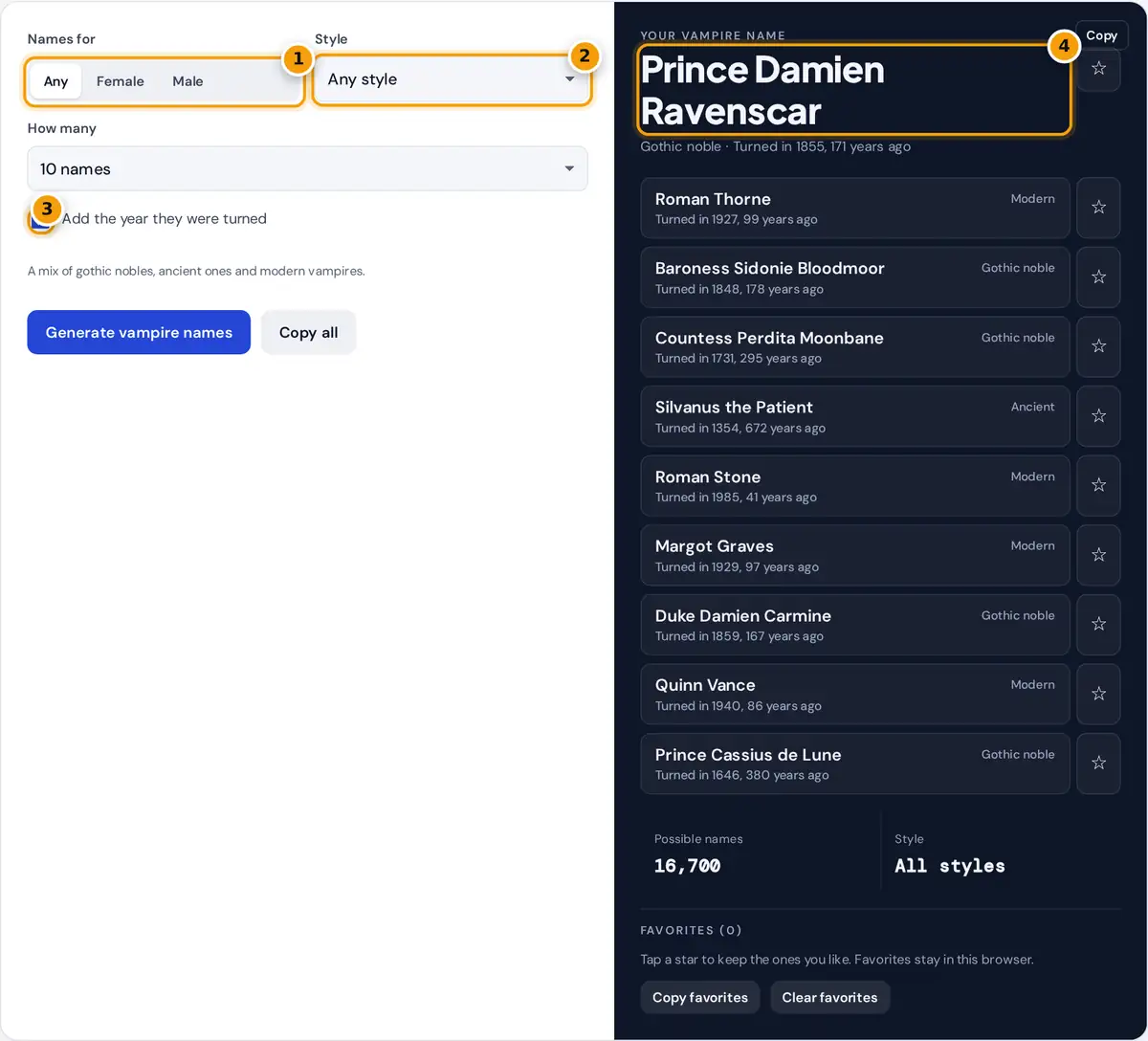
- Choose female, male or any vampire names.
- Pick gothic noble, ancient or modern style.
- Keep the turned year on for an instant backstory.
- Read your vampire name and turned year, then copy or star it.
Choose Female, Male or Any, then pick a style. Gothic noble names come with aristocratic titles such as Countess or Baron. Ancient names pair one old name with an epithet, like the Undying or of the Long Night. Modern names are short and sleek, made for a vampire who blends into city nightlife. Press Generate to see a fresh list.
With the year box ticked, every vampire gets the year they were turned and how many years ago that was, which gives you a quick backstory. Gothic vampires are turned between 1600 and 1899, ancient ones between 900 and 1599, and modern ones from 1920 on. Click a name to copy it, or tap the star to save it to your favorites.
Vampire Name Styles
| Style | Pattern | Example |
|---|---|---|
| Gothic noble | Title + first name + surname | Countess Seraphine Ravenscar |
| Gothic noble | First name + surname | Lucien Vesperwood |
| Ancient | Name + epithet | Malachar the Sleepless |
| Modern | Short first name + surname | Jade Graves |
Gothic names use 30 female and 30 male first names with an old European feel, seven titles for each gender and 30 shadowy surnames such as Bloodmoor, von Nacht and de Lune. Ancient vampires can also take one of 15 invented names that suit any gender.
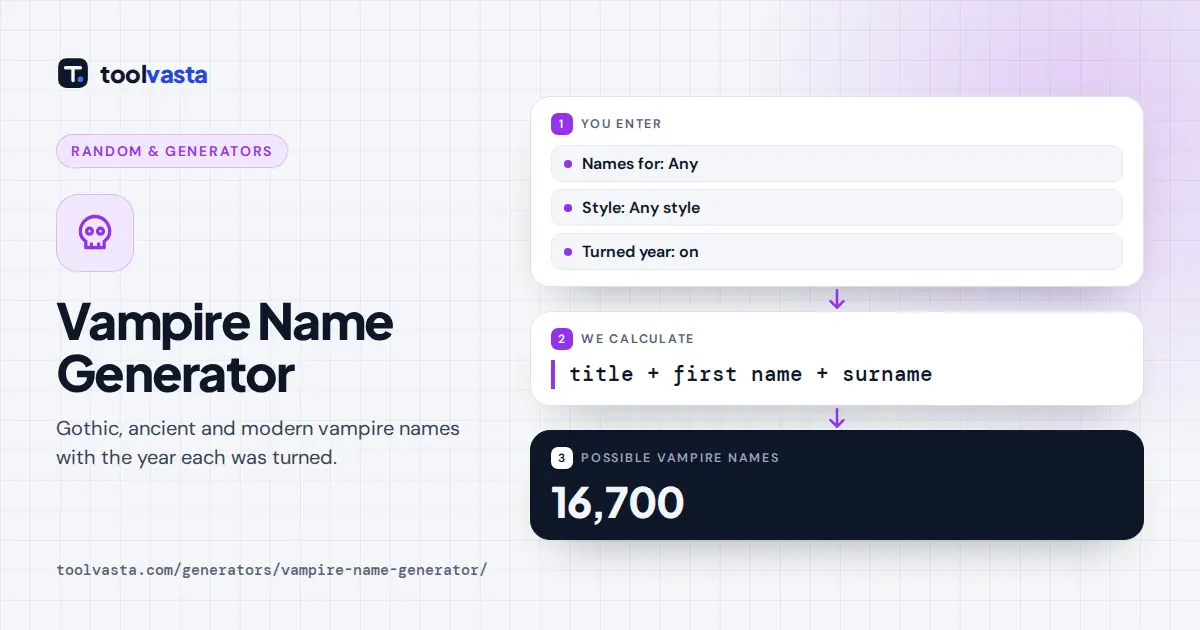
For gothic female vampires that is 7 × 30 × 30 + 30 × 30 = 7,200 names. All styles together give 16,700 possible vampire names, each picked with your browser's secure random source.
Why Vampires Have Grand Names
Vampires in eastern European folklore were usually ordinary villagers believed to return from the grave, not nobles. The word vampire entered English in the 1730s, when reports of these beliefs spread across Europe. The aristocratic vampire came later, from literature: John Polidori's The Vampyre (1819) featured the elegant Lord Ruthven, Sheridan Le Fanu's Carmilla (1872) a mysterious countess, and Bram Stoker's Dracula (1897) the most famous count of all. Since then, titles, castles and old family names have been part of the vampire image.
Modern fiction often goes the other way, with vampires hiding in plain sight under everyday names. That is why the modern style uses short first names and plain surnames that would not look out of place in an office or a nightclub.
Tips for Naming a Vampire Character
- Let the name show age. An ancient vampire might use one name only, while a younger one still carries a full human name.
- Use the turned year. A vampire turned in 1743 would remember powdered wigs and candlelight. Let that shape how they speak and dress.
- Consider an alias. Long-lived vampires may change names every few decades. Generate a gothic name for their past and a modern one for their present.
- Avoid famous names. Dracula, Carmilla and Lestat belong to well-known stories, so original names keep your character your own.
- Read it aloud by candlelight. If a name sounds dramatic when whispered, it works.
Naming a Vampire Family or Coven
Vampire stories often revolve around a household, a bloodline or a coven rather than a single character. To build one, generate a gothic noble as the head of the house and give the same surname to the vampires they turned. Use the turned years to set up the family tree: the elder was turned in the 1600s, a favored companion in the 1800s, and a reluctant newcomer only a few decades ago. That spread of eras gives you natural conflict, because each member remembers a different world and holds different ideas about how to live among humans.
Where to Use Vampire Names
These names are made for horror and fantasy novels, tabletop role-playing games, live-action role play, video game characters, Halloween costumes and murder mystery parties. Everything is invented from common names and gothic words, so you are free to use the results in your projects.
Frequently asked questions
How do I make a good vampire name?
Combine an old-fashioned first name with a dark or aristocratic surname, then add a title such as Count or Lady for a gothic noble. Choose a style that matches the age and attitude of your vampire.
What are good female vampire names?
Elegant, old European names work well, such as Seraphine, Lenore, Ottilie or Severine. Pair one with a gothic surname and a title, for example Countess Isolde Ravenscar or Lady Ligeia de Lune.
What does the turned year mean?
It is the year your vampire became undead, with the number of years since then. Gothic vampires are turned between 1600 and 1899, ancient ones between 900 and 1599, and modern ones from 1920 on.
Why are so many vampires counts and countesses?
Aristocratic vampires come from nineteenth century fiction, such as Polidori's Lord Ruthven, Le Fanu's Carmilla and Stoker's Count Dracula. Folklore vampires were usually ordinary villagers instead.
How many vampire names can the generator make?
It can make 16,700 names across all three styles and both genders. Gothic female names alone have 7,200 combinations of title, first name and surname.
Can I use these names for a game or book?
Yes. All names are invented combinations of common first names and gothic words, free to use in novels, role-playing games, costumes and other projects. Famous literary vampires are left out on purpose.