How to Use the Tire Size Calculator
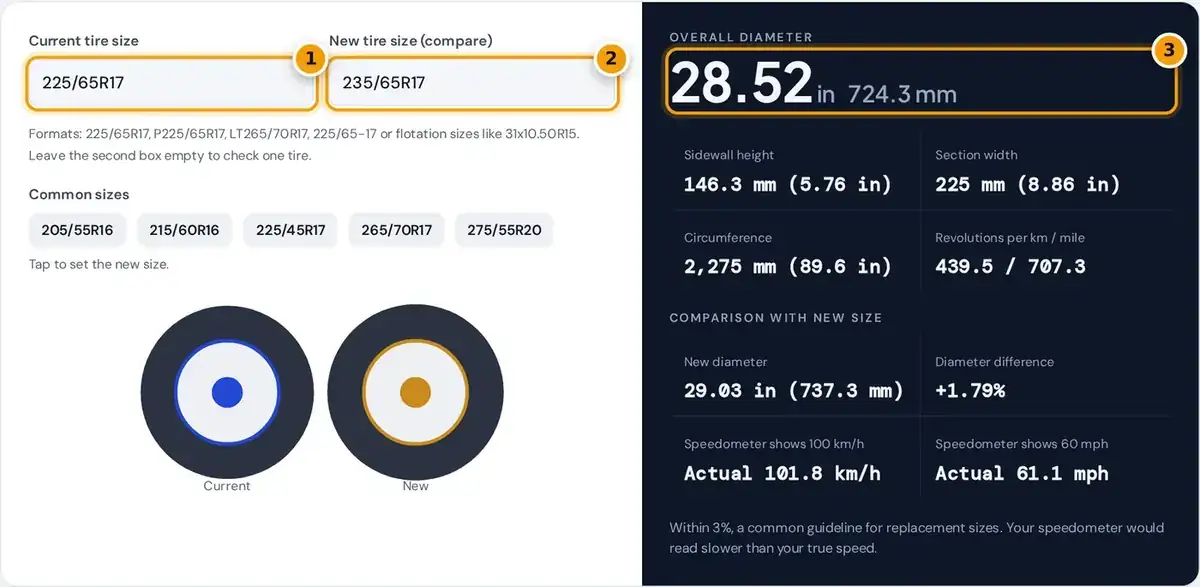
- Enter your current tire size, such as 225/65R17, LT or flotation sizes.
- Enter the new size to compare, or leave it empty to check one tire.
- Read the diameter, sidewall, circumference and speedometer error for the new size.
Start by typing your current tire size, such as 225/65R17, in the first box. The calculator reads P, LT and ST sizes, sizes with a dash like 225/65-17, and even flotation sizes such as 31x10.50R15.
To compare, type a new tire size in the second box or tap one of the common sizes below it. Leave the second box empty when you only want the dimensions of a single tire.
The result shows the overall diameter, sidewall height, section width, circumference and revolutions, plus the percent difference and speedometer readings. A side view draws both tires to scale for a quick and easy visual check.
How to Read a Tire Size
The size is molded into the sidewall of nearly every tire. In 225/65R17, 225 is the section width in millimeters and 65 is the aspect ratio, the sidewall height as a percentage of the width.
The letter R means radial construction, and 17 is the rim diameter in inches. A leading P marks a P-metric passenger tire, LT marks a light truck tire and ST marks a special trailer tire.
The load index and speed rating that follow, such as 102H, never change the dimensions. The DOT code nearby shows the week and year the tire was made, as the NHTSA tire safety guidance explains.
Tire Size Formulas
Every dimension comes from just the three numbers printed in the size. The sidewall height is the width times the aspect ratio, and the overall diameter adds two sidewalls to the rim diameter in millimeters.
diameter (mm) = rim (in) × 25.4 + 2 × sidewall
circumference = π × diameter
revolutions per km = 1,000,000 ÷ circumference (mm)
revolutions per mile = 1,609,344 ÷ circumference (mm)
actual speed = indicated speed × new diameter ÷ old diameter
The rim is converted with 25.4 mm per inch. Circumference is pi times the diameter, and revolutions per kilometer or revolutions per mile divide that distance by the circumference, which matters for gearing and odometers.
These are nominal dimensions, based on the size system published by standards bodies such as the Tire and Rim Association. Actual tires from different brands can measure slightly larger or smaller than the nominal figures.
Worked Example: 225/65R17 vs 235/65R17
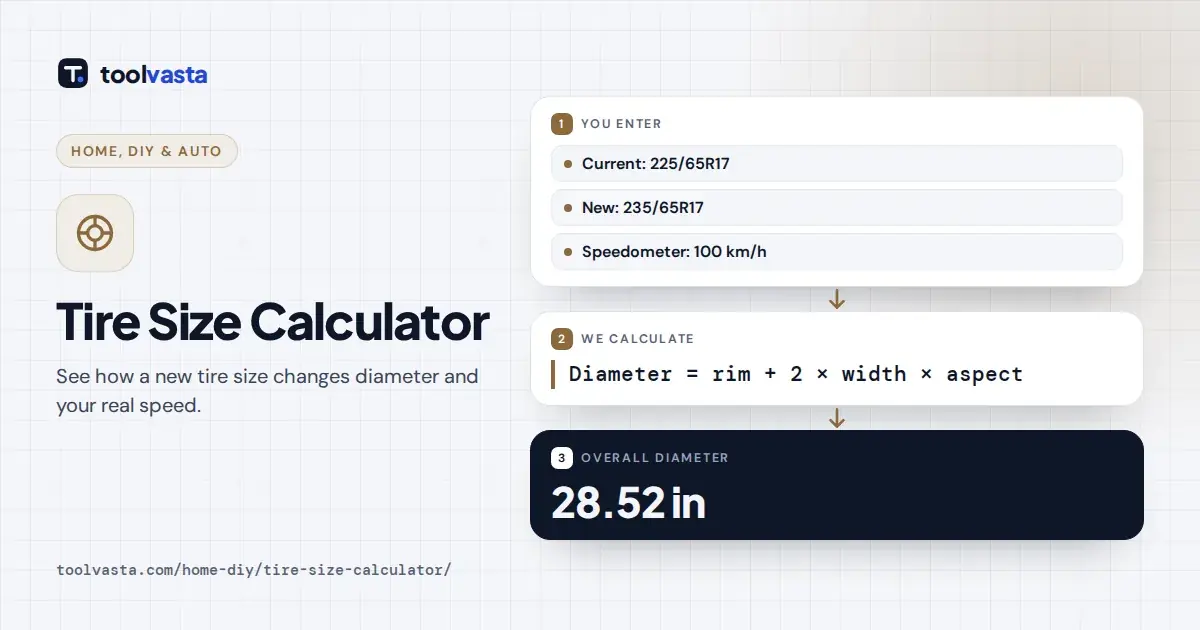
Take 225/65R17 as the first size. Its sidewall is 225 times 0.65, or 146.25 mm. The rim is 17 times 25.4, or 431.8 mm, so the overall diameter is 724.3 mm, or about 28.52 in.
The circumference is pi times 724.3, about 2,275 mm, which gives 439.5 revolutions per kilometer and 707.3 per mile. Those are the figures the calculator displays for the default current tire size on page load.
A 235/65R17 has a 152.75 mm sidewall and a 737.3 mm diameter, which makes it 1.79% larger overall. The table below compares it with several other common sizes, all calculated with exactly the same formulas.
| Size | Sidewall | Diameter | Revs per km |
|---|---|---|---|
| 205/55R16 | 112.8 mm | 24.88 in | 503.7 |
| 225/45R17 | 101.3 mm | 24.97 in | 501.8 |
| 225/65R17 | 146.3 mm | 28.52 in | 439.5 |
| 235/65R17 | 152.8 mm | 29.03 in | 431.7 |
| 265/70R17 | 185.5 mm | 31.61 in | 396.5 |
Speedometer and Odometer Error
Your speedometer counts wheel revolutions, so it assumes the original tire size. A larger tire covers more ground per wheel turn, which means your actual speed is higher than the indicated speed on the dash.
With 235/65R17 tires in place of 225/65R17, an indicated 100 km/h is really about 101.8 km/h, and an indicated 60 mph is about 61.1 mph. The calculator shows both readings for any pair of sizes.
A smaller tire does the opposite: the speedometer reads high and the odometer counts extra distance. Either way, the resulting error is the same percentage as the diameter difference, at every speed you might drive.
Plus Sizing and Equivalent Sizes
Plus sizing means going up one rim size while lowering the aspect ratio, so the overall diameter stays close to the original. The goal is a sportier look and a shorter sidewall without speedometer error.
For example, 205/55R16 and 225/45R17 differ by only 0.38%, so the change is a common plus-one upgrade. The wider tread and shorter sidewall usually help sharpen steering response but can make the ride feel firmer.
To find other equivalent sizes, try several widths and ratios in the second box and keep the ones within a small percentage. The side view makes any change in sidewall height very easy to see.
Choosing a Different Tire Size
Many tire shops use about 3% as a practical limit for diameter change on passenger vehicles. Your vehicle maker's placard on the driver's door and the approved sizes in the manual should always come first.
- A larger diameter makes the speedometer read low and slightly reduces acceleration.
- A smaller diameter makes the speedometer read high.
- Always match or exceed the original load index and speed rating.
- Check clearance at full steering lock and full suspension compression.
All-wheel drive vehicles usually need all four tires to be the same size and a similar tread depth. Mixing diameters on those vehicles can strain the drivetrain, so replace these tires as a full set.
Winter tires are often fitted in a narrower size on smaller rims, which is fine when the overall diameter stays close. Use the calculator to confirm the winter size before you buy a second set.
Assumptions and Limits
The calculator uses nominal dimensions only. Real tires vary by brand and model, grow slightly larger with inflation pressure and wear down by several millimeters of tread depth over their whole life on the road.
The loaded radius, measured with the vehicle's full weight on the tire, is smaller than the free diameter. Revolutions per kilometer from a manufacturer's data sheet can therefore differ by about a percent or two.
Treat the results as a guide, not a fitment guarantee. Wheel width, offset and brake clearance also decide whether a size fits, so confirm any change with a qualified tire professional before driving on it.
Frequently asked questions
How do I calculate tire diameter?
Multiply the width by the aspect ratio and divide by 100 to get the sidewall in millimeters. Double it, add the rim diameter times 25.4, and divide by 25.4 for inches. 225/65R17 is 28.52 in.
How much bigger can I go on tire size?
A common guideline is to stay within about 3% of the original overall diameter. Check your owner's manual and the door placard for approved sizes, and confirm clearance before buying.
Will bigger tires affect my speedometer?
Yes. A tire 2% larger in diameter makes the speedometer read about 2% low, so an indicated 100 km/h is about 102 km/h actual, and the odometer undercounts distance.
What does the 65 mean in 225/65R17?
It is the aspect ratio. The sidewall height is 65% of the 225 mm section width, which is 146.25 mm, so a lower number means a shorter, sportier sidewall.
Are 225/45R17 and 205/55R16 interchangeable?
Their diameters differ by less than 0.4%, so the change is common as a plus-one upgrade, provided the wheel fits your vehicle and the load rating is sufficient.
What does the R mean in a tire size?
R stands for radial construction, where the cord plies run across the tire at right angles to the direction of travel. Almost all modern passenger and light truck tires are radial.