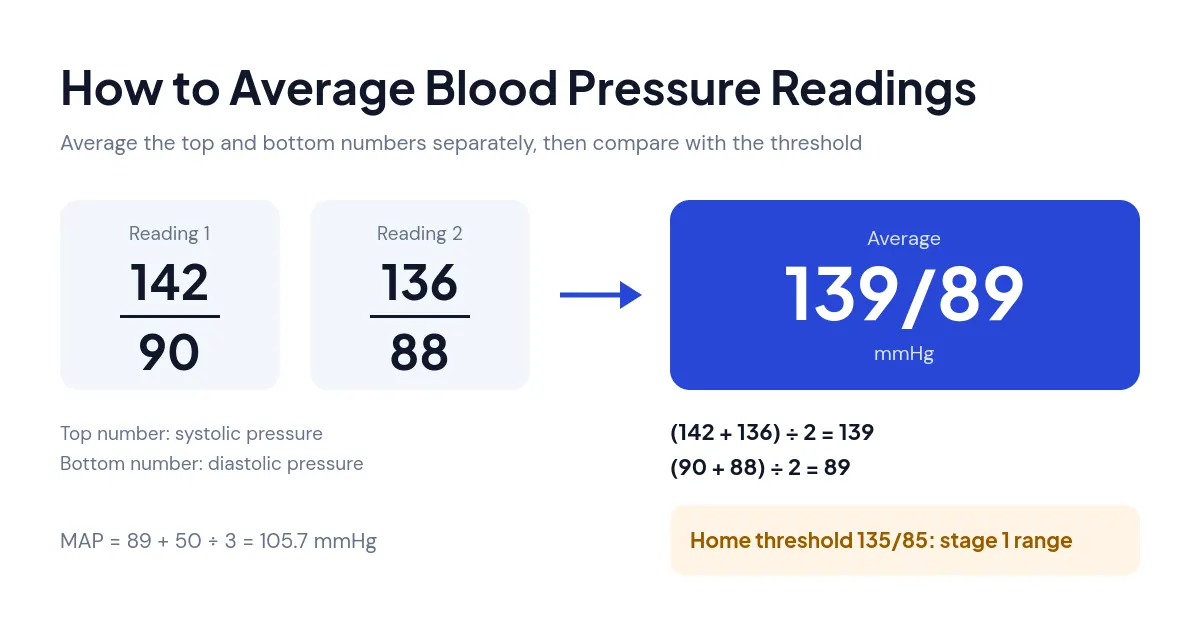
Quick answer: Average your readings, then compare the result with the UK thresholds: 140/90 or higher is high when measured by a nurse or GP, and 135/85 or higher is high at home. Home readings of 142/90 and 136/88 average 139/89, which is in the stage 1 range. This blood pressure calculator also shows mean arterial pressure.
What Do the Two Blood Pressure Numbers Mean?
A blood pressure calculator averages a set of readings and tells you which range the average falls in. Blood pressure is written as two numbers in millimetres of mercury (mmHg). The first, systolic, is the pressure when your heart pushes blood out. The second, diastolic, is the pressure when your heart rests between beats.
A single reading can be misleading, because blood pressure rises with stress, caffeine, a full bladder or simply being in a surgery. That is why NICE guideline NG136 on hypertension bases a diagnosis on an average of several home or 24-hour readings, and why home readings have lower thresholds than clinic readings. This calculator applies both sets of thresholds, so you can check the numbers from a home monitor, a pharmacy check or a GP appointment.
How Do You Average a Set of Readings?
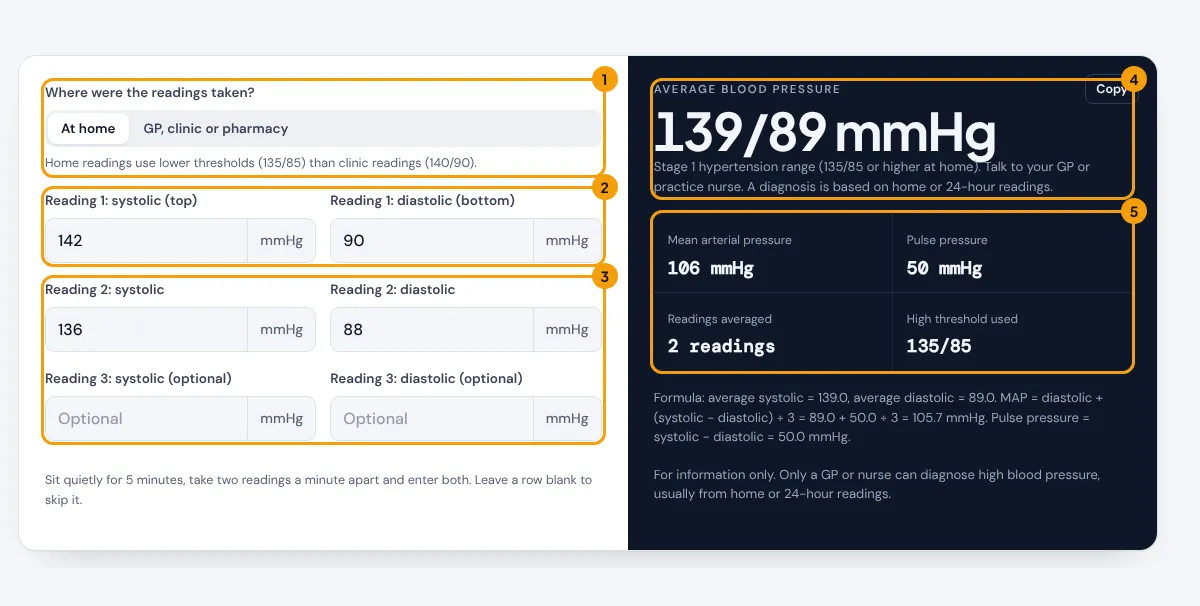
- Choose whether the readings were taken at home or by a GP, nurse or pharmacist.
- Enter the systolic (top) and diastolic (bottom) numbers of your first reading.
- Enter a second reading, and a third if you have one.
- Read the average blood pressure and the range it falls in.
- Check the mean arterial pressure and pulse pressure, then copy the result for your records.
For the most useful home average, follow the NICE method: take two readings a minute apart, seated, in the morning and the evening for at least 4 days, ideally 7. Ignore the first day, then average the rest. You can enter one session at a time here, or work out the weekly averages and enter those.
How Is Average Blood Pressure and MAP Calculated?
Average blood pressure is calculated by averaging the systolic numbers and the diastolic numbers separately. You never average the two numbers together.
Average diastolic = (D1 + D2 + … + Dn) ÷ n
Mean arterial pressure (MAP) = diastolic + (systolic − diastolic) ÷ 3
Pulse pressure = systolic − diastolic
Worked example. Two home readings are 142/90 and 136/88.
- Average systolic = (142 + 136) ÷ 2 = 139 mmHg.
- Average diastolic = (90 + 88) ÷ 2 = 89 mmHg.
- MAP = 89 + (139 − 89) ÷ 3 = 89 + 16.7 = 105.7 mmHg.
- Pulse pressure = 139 − 89 = 50 mmHg.
At home the threshold is 135/85, and the diastolic average of 89 is above 85, so this average is in the stage 1 range. The same numbers measured in a clinic would be just under 140/90. The higher number decides the range: a reading only needs one of the two numbers above a threshold to count.
What Are the UK Blood Pressure Ranges?
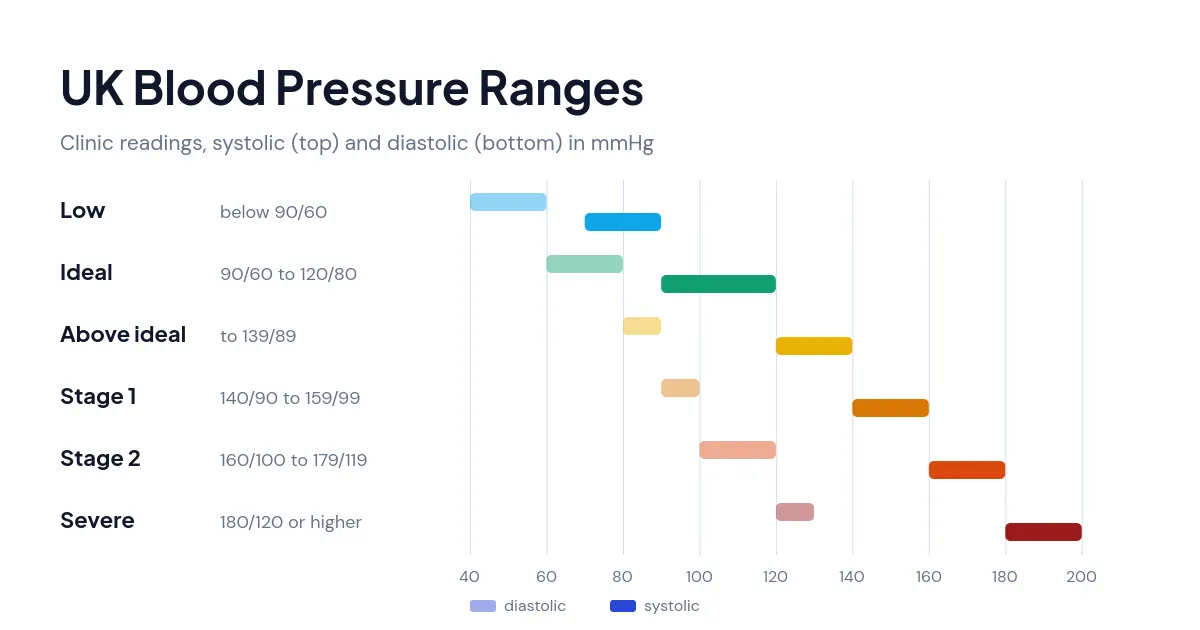
UK blood pressure ranges run from low (below 90/60) to severe (180/120 or higher), with separate high thresholds for home and clinic readings. The NHS guide to high blood pressure uses 140/90 in clinic and 135/85 at home, and NICE sets the stage 2 and severe limits below.
| Range | Clinic reading | Home or 24-hour average |
|---|---|---|
| Low | Below 90/60 | Below 90/60 |
| Ideal | 90/60 to 120/80 | 90/60 to 120/80 |
| Above ideal | Above 120/80, below 140/90 | Above 120/80, below 135/85 |
| Stage 1 hypertension | 140/90 to 159/99 | 135/85 to 149/94 |
| Stage 2 hypertension | 160/100 or higher | 150/95 or higher |
| Severe hypertension | 180/120 or higher | Seek same-day advice |
If your average is 180/120 or higher, contact your GP or NHS 111 the same day, and call 999 if you also have chest pain, breathlessness, sudden weakness or confusion. High blood pressure strains the kidneys over time, so if you have had a kidney blood test you can read the result with the eGFR calculator. Weight, alcohol and exercise all affect blood pressure, and the BMI calculator and standard drink calculator help you track two of them.
Related Tools
- Heart Rate Zone Calculator
- BMI Calculator
- eGFR Calculator
- Standard Drink Calculator
- Caffeine Half-Life Calculator
- Weight Loss Calculator
Frequently asked questions
What is a normal blood pressure in the UK?
Ideal blood pressure for most adults is between 90/60 and 120/80 mmHg. Readings between 120/80 and 140/90 are higher than ideal, and 140/90 or higher in a clinic, or 135/85 or higher at home, counts as high.
Is 140/90 high blood pressure?
Yes, when measured by a healthcare professional, 140/90 is the starting point of stage 1 hypertension. A GP will usually confirm it with home or 24-hour readings before making a diagnosis.
Which number matters more, the top or the bottom?
Both matter, and either one above a threshold counts. After about 50, the systolic (top) number is the stronger predictor of heart attack and stroke risk.
Why are home thresholds lower?
Most people have higher readings in a clinic because of the setting, which is called the white coat effect. Home and 24-hour readings are lower on average, so NICE uses 135/85 instead of 140/90 for them.
What is a good mean arterial pressure?
A mean arterial pressure of about 70 to 100 mmHg is typical for healthy adults. Doctors mainly use it in hospital to check that organs are getting enough blood.