How to Use the Water Intake Calculator
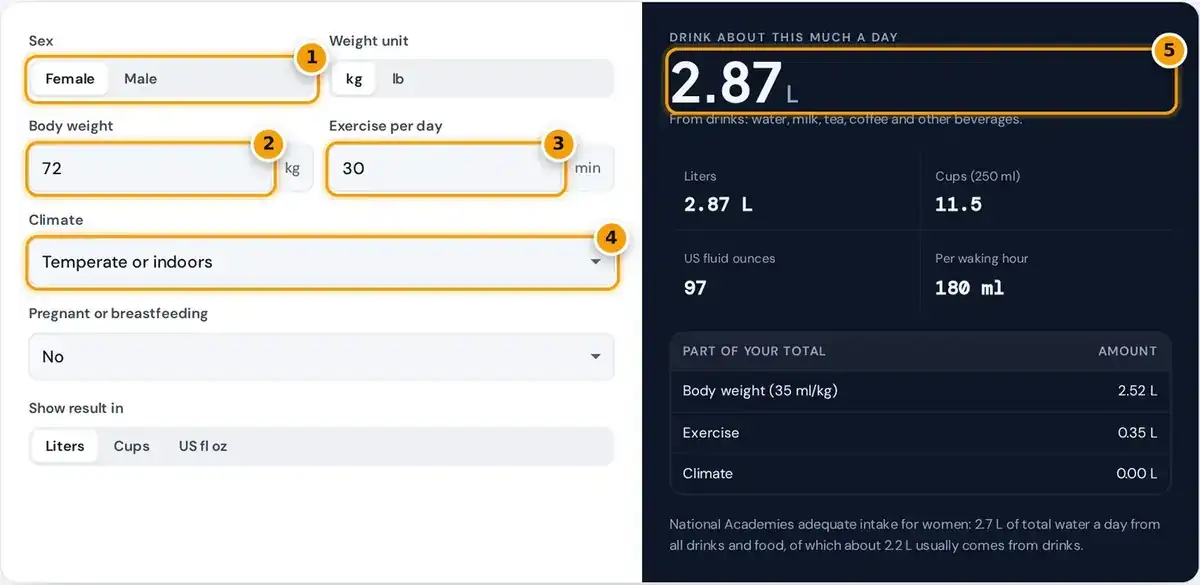
- Select female or male to compare with the right adequate intake.
- Enter your body weight in kg or lb.
- Enter your minutes of exercise a day.
- Choose your climate and whether you are pregnant or breastfeeding.
- Read how much to drink a day in liters, cups or US fluid ounces.
Choose female or male, enter your body weight in kg or lb and the exercise minutes you do on a typical day. Pick the climate you live or work in, from temperate to very hot.
If you are pregnant or breastfeeding, select that option. The calculator adds a base for body size plus sweat, and shows the daily target from drinks as liters, 250 ml cups and US fluid ounces.
A breakdown table shows how much comes from body weight, exercise and climate, and a reference line compares your result with the official adequate intake for your group. You can switch the number between units.
How the Water Intake Is Calculated
Exercise = 350 ml for every 30 minutes
Climate = + 0.5 L (hot) or + 1.0 L (very hot or humid)
Pregnancy = + 0.3 L, breastfeeding = + 0.7 L
Daily target = base + exercise + climate + pregnancy
No single formula is endorsed by health agencies. The base of 35 ml per kg sits at the upper end of the 30 to 35 ml per kg range used by dietitians for healthy adults.
The exercise allowance equals about 0.7 L per hour, inside the 0.4 to 0.8 L range the American College of Sports Medicine suggests for most active people, because sweat losses rise with effort and heat.
The pregnancy and breastfeeding additions match the gap between the adequate intakes for those stages and for other women. The popular 8 glasses rule has little scientific basis and ignores body size, activity and climate.
Worked Example
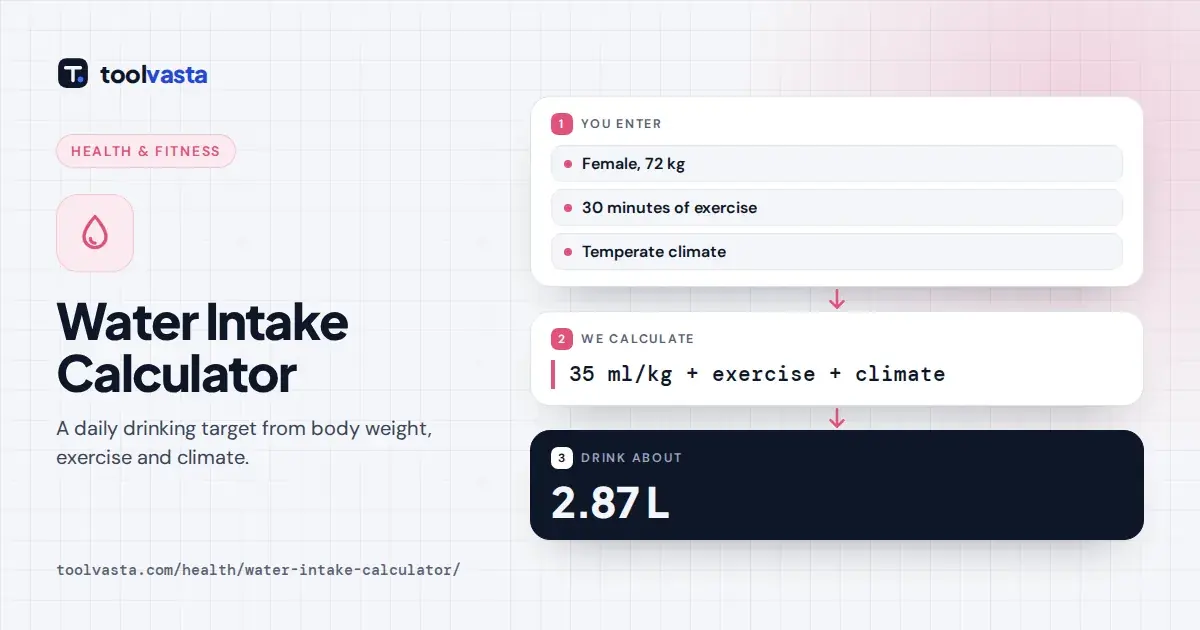
A woman who weighs 72 kg and exercises for 30 minutes daily in a temperate climate needs 72 × 35 = 2,520 ml, plus 350 ml for exercise. Her daily target is about 2.87 L from drinks.
That is 11.5 cups of 250 ml, or about 97 US fluid ounces. Spread evenly across 16 waking hours, it works out to roughly 180 ml an hour, a little less than one standard cup.
On a hot day the target rises to 3.37 L. A 90 kg man exercising 60 minutes in a temperate climate needs 3.85 L, which shows how strongly body weight and activity drive the result.
Official Adequate Intakes
| Group | Total water a day | From drinks (approx.) |
|---|---|---|
| Men, 19 and older | 3.7 L | 3.0 L (about 13 cups) |
| Women, 19 and older | 2.7 L | 2.2 L (about 9 cups) |
| Pregnancy | 3.0 L | 2.3 L |
| Breastfeeding | 3.8 L | 3.1 L |
Back in 2004 the US National Academies, then the Institute of Medicine, set an adequate intake for total water. The Dietary Reference Intakes for water give 3.7 L for men and 2.7 L for women.
Total water includes drinking water, other beverages and the water in food. About 80% usually comes from drinks and 20% from food, which is why the table lists a smaller amount coming from drinks alone.
Canada uses the same values, published in the Health Canada reference values for macronutrients. An adequate intake is a level judged to keep most healthy people well hydrated, not a strict minimum you must reach.
Exercise, Heat and Pregnancy
Exercise raises needs through sweat, and sweat rate varies widely between people. Heavy sweaters, long workouts and hot or humid weather can push losses well above the calculator's allowance of 350 ml per 30 minutes.
Climate adds 0.5 L for hot conditions and 1.0 L for very hot or humid ones. High altitude also increases water loss through breathing, so add a little extra when hiking or skiing at elevation.
Pregnancy adds 0.3 L and breastfeeding adds 0.7 L, following the adequate intakes. During long sessions in the heat, replacing electrolytes as well as water helps, because sweat carries sodium and potassium along with fluid.
Signs You Are Drinking Enough
- You rarely feel thirsty during the day.
- Your urine is pale yellow.
- Tea, coffee, milk and soup all count toward your total.
Thirst and urine color are the simplest daily checks. Pale yellow urine usually means good hydration, while dark yellow urine, a headache, fatigue or a dry mouth can all be early warning signs of dehydration.
Coffee and tea count toward your fluid intake. Caffeine has a mild effect on urine output, but regular drinkers adapt, so these beverages still hydrate overall when they are part of your normal daily routine.
Older adults can feel less thirsty even when they need water, so regular drinks with meals help. Children, athletes and outdoor workers also benefit from planned drinking rather than waiting for strong thirst to appear.
Water and Weight Loss
Water has zero calories, so swapping sugary drinks for water is one of the simplest ways to cut calories without changing meals. A single can of regular soda replaced every day adds up quite quickly.
Some studies suggest that drinking about 500 ml of water before meals can help people feel fuller and eat a little less. The effect on appetite is modest, but it is very easy to try.
Drinking more than you need does not burn fat by itself. For weight loss, water works best as a replacement for high-calorie drinks, alongside the food, sleep and activity habits that really drive long-term change.
Too Much Water and Other Limits
Drinking several liters in a short time can dilute blood sodium, a potentially dangerous condition called hyponatremia. It is rare but has occurred in endurance events and drinking contests, so spread intake across the day.
Needs vary with body size, fitness, diet, altitude and health. People with heart failure, kidney disease or other conditions may be given a fluid restriction by their doctor, which should always override any calculator target.
Results are estimates for general information only, not personal medical advice. Talk with a doctor or registered dietitian before making big changes, especially if you are pregnant, breastfeeding, under 18 or managing a health condition.
Frequently asked questions
How much water should I drink a day?
A common guide is about 35 ml per kg of body weight from drinks, plus extra for exercise and heat. The National Academies adequate intake is 3.7 L of total water for men and 2.7 L for women.
How many cups of water a day is that?
For a 72 kg adult with 30 minutes of exercise it is about 2.87 L, or 11.5 cups of 250 ml. The calculator shows your personal number in liters, cups and US fluid ounces.
Does coffee or tea count toward water intake?
Yes. Tea, coffee, milk and other drinks all count toward your daily total. Regular caffeine drinkers adapt to its mild effect on urine output, so these drinks still hydrate overall.
How much water should I drink to lose weight?
Drink enough to stay well hydrated and use water instead of sugary drinks. Drinking about 500 ml before meals may help some people feel fuller, but extra water does not burn fat by itself.
Can you drink too much water?
Yes. Drinking several liters in a short time can dilute blood sodium, a condition called hyponatremia. Spread your intake through the day, follow thirst and avoid forcing large amounts at once.
Do I really need 8 glasses of water a day?
No fixed rule fits everyone. Eight glasses of 250 ml is 2 L, which is less than many adults need from drinks. Your target depends on body weight, activity, climate and pregnancy.